Saudi Arabia’s Air Connectivity Program is accelerating the Kingdom’s rise as a major global tourism hub by expanding international routes and forging new airline partnerships. Central to Vision 2030, the program aims to make it easier for travelers worldwide to reach Saudi Arabia’s cultural, natural, and luxury destinations.
Launched in 2021, the initiative positions air travel as a cornerstone of the national tourism strategy and supports the national target of welcoming 150 million visitors by 2030, according to the Air Connectivity Program. It focuses on building long-term, sustainable routes in collaboration with both government entities and private-sector partners.
Since its inception, the Air Connectivity Program has introduced more than 80 new international routes and brought 17 new foreign carriers into the Saudi market, according to the Air Connectivity Program. This expansion has added over 5 million airline seats, strengthening direct links from key global source markets to cities across the Kingdom.
Expanding global routes and key source markets
China has emerged as a standout growth market. Direct services from Guangzhou, Shenzhen, Beijing, Shanghai, and Hong Kong are positioning Saudi Arabia as an attractive destination for Chinese travelers. Many of these routes are expected to grow from a few weekly flights to daily or even multiple daily frequencies, reflecting rising demand, according to the Air Connectivity Program.
In Europe, the program is reinforcing connectivity with major markets such as Germany, France, and the United Kingdom. Airlines are increasing flight frequencies in response to growing interest, broadening access to both primary and secondary destinations within the Kingdom.
Beyond China and Europe, Saudi Arabia is also targeting visitors from Singapore, Japan, Korea, and North America. These markets are critical for diversifying visitor profiles and expanding direct links to different regions of the country, not only by adding new airlines but also by boosting capacity on existing routes.
Recent announcements during the TOURISE Summit in Riyadh underline this momentum. A new route between Milan Malpensa and the Red Sea region is set to reinforce the luxury tourism offering along Saudi Arabia’s western coast, supported by cooperation with Red Sea Global and the Saudi Tourism Authority. Another key development is a direct flight from Doha to Hail, which will connect northern Saudi Arabia with Qatar Airways’ global network of more than 170 destinations, according to the Air Connectivity Program.
Rather than competing with established nearby hubs such as Dubai, Doha, and Istanbul, Saudi Arabia views them as complementary gateways. Many travelers arriving in these cities are beginning to add Saudi Arabia to multi-stop regional trips, and the program seeks to harness this trend in line with shared tourism ambitions across the region.
Future-focused airports and passenger experience
The program also addresses global aviation challenges, including aircraft delivery delays and increasing competition among destinations. To stay competitive, Saudi Arabia is designing its air transport system around three priorities: low operating costs, high efficiency, and an enhanced passenger experience, according to the Air Connectivity Program.
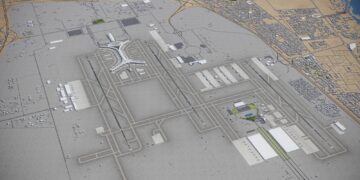
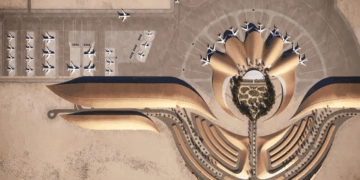
Future airport concepts within the Kingdom are expected to move beyond traditional check-in processes by embracing home and mobile-based solutions. This shift will free terminal space for retail, dining, and leisure services, while competitive aeronautical fees aim to foster stronger, long-term airline partnerships.
Aligning airport design with tourism needs is another central goal. This includes tailoring terminal layouts to target markets, anticipating traveler expectations, and ensuring a seamless journey from arrival to departure. While technology will play a major role in streamlining travel, the program emphasizes preserving a human, personalized touch at every stage of the trip.
Saudi Arabia’s strategic location between East and West, combined with diverse natural landscapes, cultural heritage, and emerging culinary and luxury offerings, gives it a strong foundation to become a leading global hub. With a young tourism sector unburdened by legacy systems, the Kingdom can implement best practices from the outset and set new benchmarks in aviation and travel services.
Overall, the rapid development of the Air Connectivity Program is reshaping how visitors access Saudi Arabia and experience the region. Through targeted route growth, infrastructure innovation, and a customer-focused vision, the Kingdom is laying the groundwork to become one of the world’s most connected and dynamic travel destinations.